How safe are private jets?
As safe as the operator flying you. A paid charter is commercial air transport: the operator must be certified, its pilots trained and checked, its aircraft looked after by approved organisations. Here is how to check.
The short answer: as safe as the operator's certificate
If you pay for a private jet flight, it is commercial air transport. The operator must hold an air operator certificate (AOC) and is audited by its authority; in the EU it follows the same rules as an airline. A flight without that certificate doesn't meet the same standard.
| Flight | What the operator needs | Rules it flies by |
|---|---|---|
| Charter: you pay for the flight | An air operator certificate (AOC) from its aviation authority | Commercial air transport: EU Air OPS, Part-CAT; in the US, Part 135 |
| The owner's own jet, not for hire | In the EU, a declaration to the authority (complex aircraft) | Non-commercial rules |
| Cost-sharing with a private pilot | No AOC | A private arrangement, not held to AOC standards (UK CAA). In the EU, small aircraft only, never a jet |
Notes and sources
Sources: Regulation (EU) No 965/2012 (Air OPS), consolidated text of 25 May 2026, Article 6(4a), ORO.AOC.100 and ORO.DEC.100; UK CAA, 'Charters and air taxi flights'; FAA, 'Safe Air Charter' (read 11 November 2026). For weather decisions, see how weather affects a private jet flight.
The pilots: trained and checked throughout their careers
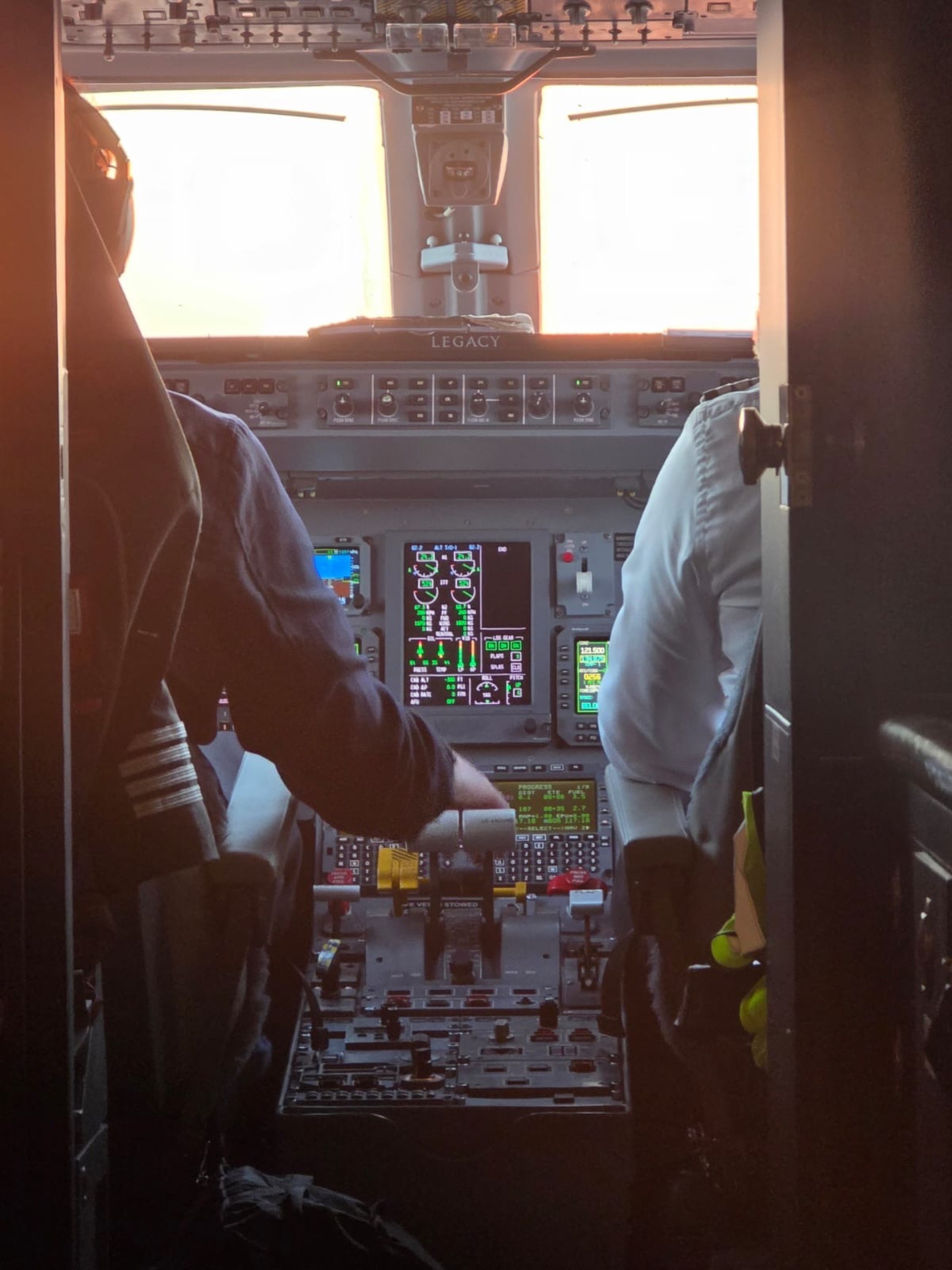
A pilot's qualifications don't stop at the licence. On commercial flights the operator trains and checks its crews on a fixed schedule, and the law sets medical and age limits.
Two pilots in a jet
On commercial flights under instrument flight rules (IFR) or at night, EU rules require at least two pilots in any jet.
- One is designated commander, with the minimum experience set in the operations manual.
Checked by the operator
Standard EU programme: an operator proficiency check valid for 6 months and a line check on the aircraft valid for 12.
- Emergency and safety equipment training and checking, plus ground and flight training, every 12 months.
A medical at least once a year
Commercial and airline pilots hold a class 1 medical certificate, valid for 12 months.
- From age 60, and from 40 for single-pilot commercial flights with passengers, it is valid for 6 months.
Age limits
From 60 to 64, a pilot may fly commercial air transport only as part of a multi-pilot crew.
- From 65, no commercial air transport at all.
Route and airports
The commander must know the route and the airports to be used, alternates included.
- Airport knowledge is kept current by operating there at least once every 12 months.
Fit to fly
A psychological assessment before a pilot starts line flying for the operator.
- An alcohol and drugs policy, and alcohol tests on crews during ramp inspections.
Notes and sources
Operators with an approved alternative programme (evidence-based training or ATQP) follow their own schedule, at an equivalent level or better. Sources: Regulation (EU) No 965/2012 (Air OPS), consolidated text of 25 May 2026, ORO.FC.105, 200, 230, 231 and A.245, CAT.GEN.MPA.170 and 175, ARO.RAMP.106; Regulation (EU) No 1178/2011, MED.A.030, MED.A.045 and FCL.065, consolidated text of 30 April 2026.
The aircraft: maintained to an approved programme
Every aircraft on a charter needs a valid certificate of airworthiness. For a jet, an approved organisation (CAMO) manages its airworthiness and an approved maintenance organisation does the work.
| Check | What EU rules require |
|---|---|
| Maintenance programme | Approved by the authority, built on the manufacturer's instructions |
| Airworthiness directives | Every applicable one carried out as the directive requires |
| Airworthiness review certificate (ARC) | Valid for one year at a time |
| Pre-flight inspection | Before every flight, by the pilot or another qualified person |
Notes and sources
Sources: Regulation (EU) No 1321/2014, Annex I (Part-M), M.A.201, 302, 303 and 902, consolidated text of 7 August 2026; Regulation (EU) No 965/2012 (Air OPS), consolidated text of 25 May 2026, ORO.AOC.100. To compare aircraft, see private jets by class.
Who checks the operator
The operator answers to its own aviation authority and, if it is certified outside the EU and flies into the EU, to EASA as well. Airlines that fall short of international safety standards can be banned from EU skies.
The operator itself
A management system with a safety policy, risk management and compliance monitoring.
- Its accountable manager is directly accountable for safety.
Its aviation authority
Issues the AOC and, in the EU, audits and inspects the operator in cycles of 24 months at most, extended to 36 or 48 only if set conditions are met.
- Ramp and unannounced inspections as needed, including alcohol tests on crews.
EASA, for non-EU operators
A non-EU operator flying commercial flights into, within or out of the EU, Iceland, Liechtenstein, Norway or Switzerland needs an EASA authorisation.
- EASA publishes the list of authorised operators.
The EU Air Safety List
154 airlines banned from EU skies, after the 48th update on 9 June 2026.
- Others may fly in the EU only under restrictions.
In the United States
Charter flights run under Part 135, with FAA checks on pilots, crews and aircraft more frequent than on private flights.
- 1,837 certificate holders and 11,582 authorised aircraft (FAA website, November 2026).
Notes and sources
In 2025 EASA counted 627 operators in its member states flying commercial jets, twin turboprops and other aeroplanes over 5,700 kg, with nearly 7,000 aeroplanes. Over 2021–2025 that group, airlines and air taxi together, had 0.13 fatal accidents per million departures; EASA publishes no separate figure for charter jets. Sources: EASA, Annual Safety Review 2026; European Commission, EU Air Safety List; EASA, TCO page; FAA, 'Safe Air Charter'; Regulation (EU) No 965/2012 (Air OPS), consolidated text of 25 May 2026, ORO.GEN.200, ARO.GEN.305, ARO.RAMP.106 (read 11 November 2026).
How to check your operator
When your trip starts in the EU or the UK, the law says you must be told who operates each flight. Look that name up on its authority's list, and ask for the certificate too: some lists are updated as little as once a year.
| Operator certified in | Where to check |
|---|---|
| An EU country | Its national aviation authority's list of AOC holders. Italy's ENAC, for example, updates its list at least once a year; the latest is dated 25 March 2026. |
| A non-EU country, flying into the EU | EASA's list of authorised third-country operators |
| The United Kingdom | The UK CAA's list of UK air operator certificates |
| The United States | The FAA's list of Part 135 certificate holders and authorised aircraft |
| Any country | The EU Air Safety List of airlines banned or restricted in the EU |
Notes and sources
The UK CAA also advises asking for the name and qualifications of the pilot. We work only with certified operators; for the questions to ask any private jet company, us included, see About us. Sources: Regulation (EC) No 2111/2005, articles 9 and 11; UK CAA; ENAC, 'Operatori titolari di COA'; EASA; FAA (read 11 November 2026).
On the day: what the rules require
Some of this you will see; most of it happens before you board. Each step comes from the EU rules for commercial flights.
Planning
An operational flight plan for every flight, built on the aircraft's performance and the conditions expected en route and at the airports.
Fuel and alternates
Two safe landing options for every flight under instrument rules, and at least 30 minutes of final reserve fuel for a jet.
Before departure
A pre-flight inspection. The commander confirms airworthiness, mass and balance, baggage and documents before the flight starts.
Boarding
A safety briefing and a picture card showing the exits and emergency equipment. Hand baggage is stowed so it cannot move.
Take-off and landing
Everyone seated with belts fastened, exits and escape paths clear, equipment and baggage secured.
Throughout
The commander is responsible for everyone on board from stepping aboard until leaving the aircraft at the end of the flight, and can disembark anyone who puts the flight at risk.
Notes and sources
Sources: Regulation (EU) No 965/2012 (Air OPS), consolidated text of 25 May 2026, Annex IV (Part-CAT): CAT.OP.MPA.160, 170, 175, 181, 182, 225 and 230, CAT.GEN.MPA.105; Regulation (EU) No 1321/2014, M.A.201. For weather, see our weather guide; for bags, how much luggage you can bring.
One contact for every leg
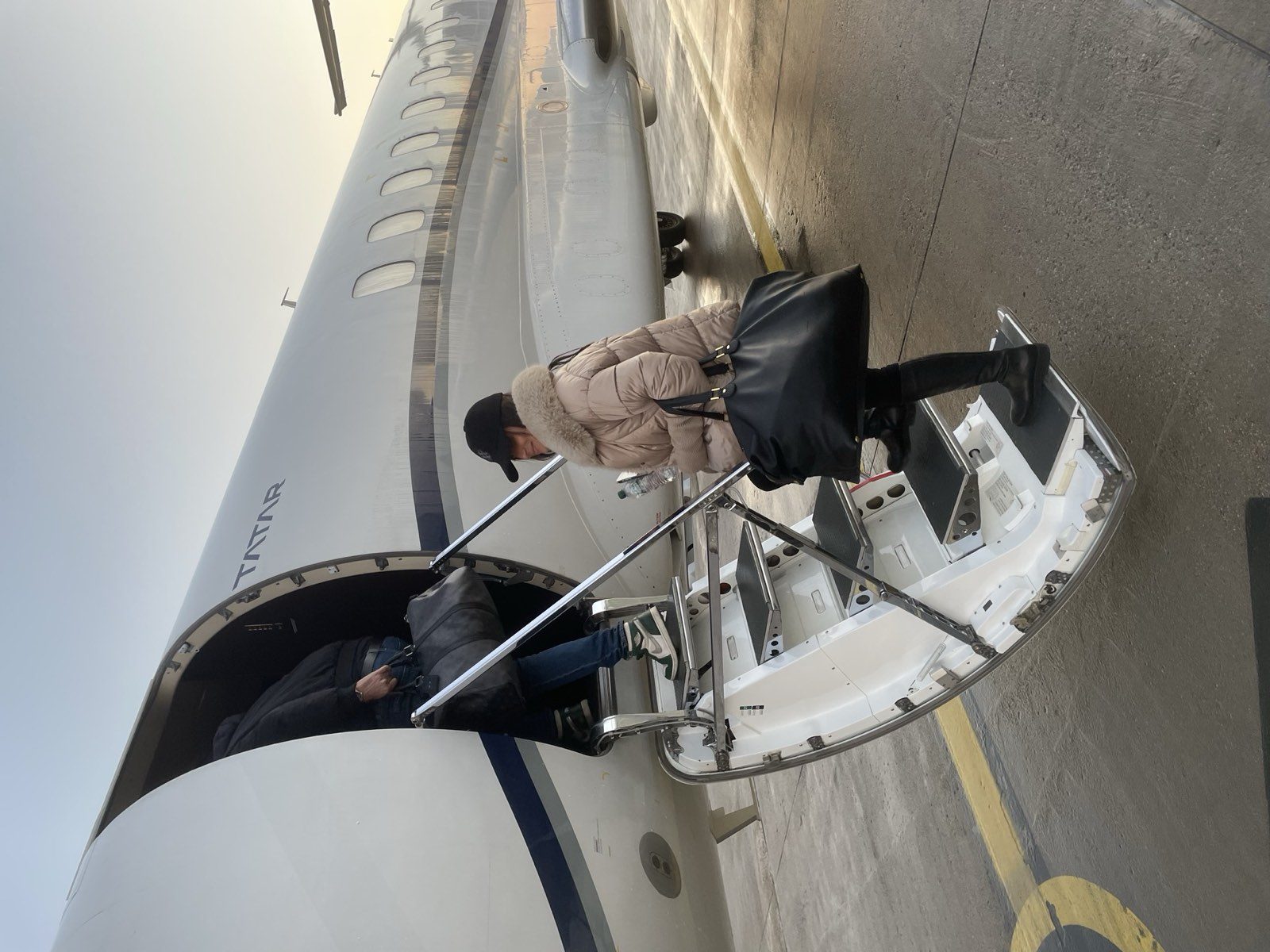
We work only with certified operators. Your account manager arranges every leg with them and stays your one contact, door to door, from the first option to the flight home.
Questions people ask about private jet safety
We answer from 8:00 to 22:00 Italian time, in English and Italian.
Speak to an advisorAre private jets as safe as airliners?+
In the EU, a charter flight follows the same commercial air transport rules as an airline flight, with the operator certified and audited. EASA reports airlines and air taxi together: 0.13 fatal accidents per million departures over 2021–2025. It publishes no separate figure for charter jets.
What is an illegal charter?+
A flight sold for payment by someone without an air operator certificate. The UK CAA warns that you may not be insured, and the FAA calls illegal charter a serious safety hazard. Check the operator before you fly, and never accept a flight on trust.
Is an older jet less safe?+
Under EU rules, any aircraft used for charter, new or not, needs an approved maintenance programme, every applicable airworthiness directive carried out, and an airworthiness review certificate valid for one year at a time. If you prefer a recent aircraft, say so in your brief.
Do private jets have two pilots?+
On commercial flights under instrument flight rules or at night, EU rules require at least two pilots in any jet. One of them is the commander, responsible for the flight.
How is the operator insured?+
Every airline and aircraft operator flying within, into or out of the EU must carry passenger liability insurance of at least 250,000 Special Drawing Rights per passenger. That is the International Monetary Fund's unit of account.
Is a helicopter transfer held to the same standard?+
Yes, under the same framework: a paid helicopter flight is commercial air transport, and the operator needs an air operator certificate under the same EU rules. Some crew rules differ: depending on its size and the flight, a helicopter may fly with one pilot. For a transfer, speak to an advisor.
Are empty-leg flights as safe?+
An empty leg is still a paid flight, so it is commercial air transport: the operator needs the same certificate and follows the same rules. See how empty legs work.
What is the EU Air Safety List?+
The European Commission's list of airlines banned or restricted in the EU for falling short of international safety standards. After the 48th update, on 9 June 2026, 154 airlines are banned. Anyone selling flights in the EU must bring it to passengers' attention.
Price your flight
Choose a route, date and number of passengers to see estimated prices by jet class. Your account manager confirms the final price with your quote.
Estimates are indicative and based on routed distance at each category's rate with a category minimum. Final proposals depend on aircraft availability, positioning, airport fees, crew duty time and schedule. An advisor confirms exact pricing with certified operators.
Send the brief
Route, dates, passengers and anything that matters to you about the aircraft or the crew. Your account manager replies with options from certified operators.